
CONTRIBUTORS

Bobby Eng, CIMA®
Senior Vice President, Head of Institutional ETF Distribution,
Franklin Templeton Canada
Over the past decade, global equity markets have often moved in surprising harmony. When U.S. stocks surged, the rest of the world generally followed, making diversification seem less potent and, at times, less urgent.
But as we enter 2026, that world is shifting. Markets are no longer marching in lockstep, and dispersion - not concentration, is beginning to define the investment landscape.
From Concentration to Dispersion
After years dominated by a narrow handful of large U.S. mega‑cap stocks, markets are showing widening dispersion. Meanwhile, international regions are increasingly driven by their own policy cycles, earnings trajectories, and structural growth forces.
This matters. When markets become more region‑specific and less correlated, the power of global diversification comes roaring back.
Regional Leadership Is Taking the Stage
Across Europe, Asia, and parts of Emerging Markets, central banks are at vastly different points in the policy cycle. Some are easing to bolster growth, while others focus on stability after years of tightening. These divergences are generating more varied, idiosyncratic returns and fewer one‑size‑fits‑all outcomes.
Asia stands out in particular. Several economies are benefiting from accommodative monetary conditions and their central role in evolving global supply chains. Should U.S. growth cool while Asia maintains momentum, market leadership may broaden meaningfully—further strengthening the case for regional diversification.
The Korean Wave
South Korea is one of the most compelling examples of this new era of dispersion.
After a blockbuster 2025—when it emerged as the best‑performing country globally with a remarkable 92% return, South Korea entered 2026 with strong continued momentum, already gaining more than 36% year‑to‑date. The semiconductor rebound has been powerful, driven by surging global demand for cutting‑edge chips and an expanding wave of AI‑related investment. Korean leaders like Samsung Electronics and SK Hynix remain at the center of that cycle.
But Korea’s appeal runs deeper than just cyclicals. For years, investors referenced the so‑called “Korea discount,” where high‑quality, globally competitive companies traded at persistently low valuation multiples. Corporate‑governance concerns and limited shareholder‑return frameworks held back broader re‑rating potential.
That narrative may be changing. Policymakers are pushing governance reforms, improved shareholder alignment, and more consistent capital‑return behavior. If execution follows intentions, Korea could see a meaningful structural re‑rating.
Korea represents dispersion in real time—a blend of cyclical strength, reform potential, and valuations that still don’t fully reflect its global relevance. It’s exactly the type of distinctive opportunity that emerges when markets stop behaving as one.
Asia and Emerging Markets Offer Differentiated Return Profiles
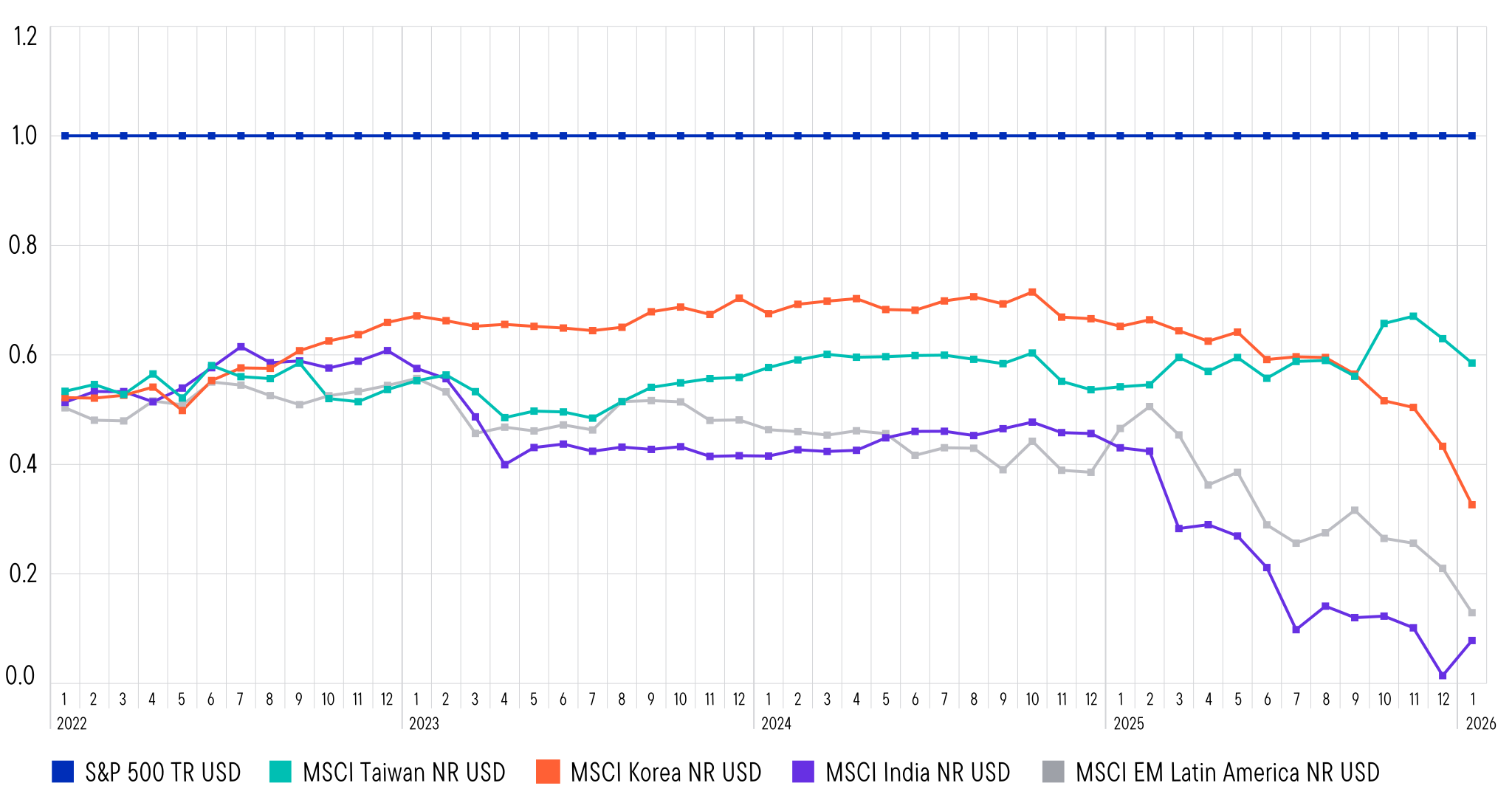
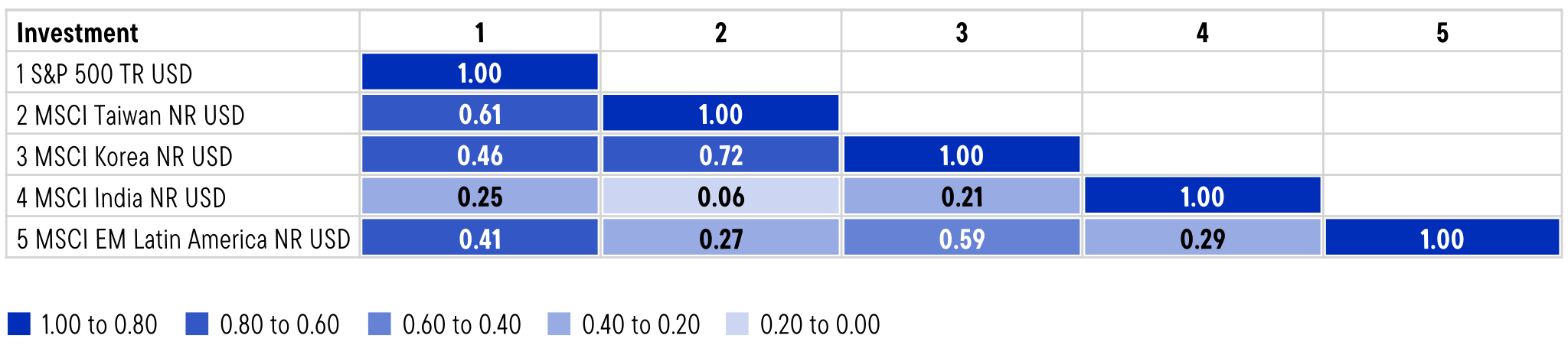
Source: Morningstar Research Inc., as of January 31, 2026.
As correlations fall and return paths diverge, regional leadership is becoming far more dynamic. No single region is poised to dominate consistently—but portfolios positioned across multiple markets can be more resilient as leadership rotates.
What this Means for Institutional Portfolios
As dispersion accelerates in 2026, broad international exposure can play a larger—and more strategic—role.
Franklin Templeton’s low-cost, passive equity single‑country ETFs offer institutional investors a precise way to build international allocations, implement global themes, or complement broad‑market exposures. They provide efficient passive beta exposure and trade intraday, long or short, with exceptional cost‑effectiveness.
In an environment where cross‑country correlations are declining, these tools can help investors capture the diversification benefits of a truly global portfolio.
The takeaway is simple: in 2026, looking beyond North American borders isn’t just optional—it may be essential for what comes next.
Endnotes
- Source: Morningstar Research Inc., as of January 31, 2026. All rights reserved. The information contained herein is proprietary to Morningstar and/or its content providers; may not be copied or distributed; and is not warranted to be accurate, complete or timely. Neither Morningstar nor its content providers are responsible for any damages or losses arising from any use of this information.
Franklin Templeton Canada is a business name used by Franklin Templeton Investments Corp.
Please note this article is for information purposes only and does not in any way constitute investment advice. It is essential that you seek advice from a registered financial professional prior to making any investment decision.
The information presented herein is considered reliable at the present time, however, we do not represent that it is accurate or complete, or that it should be relied upon as such. Speculation or stated beliefs about future events, such as market and economic conditions, company or security performance, upcoming product offerings or other projections represent the beliefs of the speaker/author and do not necessarily represent the views of Franklin Templeton Investments Corp. General business, market, economic and political conditions could cause actual results to differ materially from what the speaker presently anticipates or projects. The information presented is not a recommendation or solicitation to buy or sell any securities.