

CONTRIBUTORS

Michael J. Bazdarich, PhD
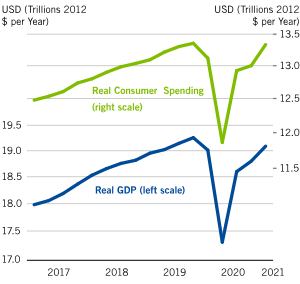
Real gross domestic product (GDP) grew at a 6.4% annualized rate in 1Q21, about in the middle of the range of Wall Street forecasts. As expected, the bulk of the growth came from consumer spending, which grew at a real annualized rate of 10.7%. The real dollar increase of consumer spending actually exceeded that of GDP, so that other sectors appear to have contributed negatively to 1Q growth.
In those other sectors, there were nice reported gains in business capital spending and nondefense federal government purchases. The data released today give no further detail on where those nondefense government purchases occurred, but it is a relatively safe bet that this reflected COVID-19 vaccination efforts.
The "surprise" amount of increase in federal purchases came to about $14 billion (non-annualized). Divide this by the roughly 100 million vaccinations provided between January and March, and that comes to about $140 per shot, which sounds about right. This means that the government’s vaccination drive efforts contributed about 1 percentage point to 1Q growth.
Exhibit 1: Real GDP and Real Consumer Spending
Source: Bureau of Economic Analysis, Federal Reserve Board. As of 31 Mar 21.
Within consumer spending, the largest spending gains by far were for merchandise, with all major components showing very strong gains. This was in line with the March retail sales data reported earlier this month. However, there were also nice gains in various service sectors not covered by the retail data, such as health care, recreation, financial services and others. Previously released monthly data through February had not shown much gain for these sectors, so it appears that they benefited from consumers’ March spending spree as well as did merchandise sectors.
The downsides of the GDP data were that rising imports accounted for a good portion of the increase in consumer spending, and much of that spending also came out of inventories. Many Wall Street analysts believe that the 1Q softness in inventories sets us up for restocking—thus further strong GDP growth—in 2Q. We are inclined to push back on this premise.
That is, we don’t expect the strong March consumption gains to be continued in 2Q, at least not for merchandise. We think much of the March strength reflects some final catching up with enforced abstinence during the shutdowns last year. Thus, we would look for much softer growth in goods sectors going forward, even with inventory restocking. Meanwhile, growth in homebuilding and construction in general slowed noticeably in 1Q, and we expect that slowing to continue going forward.
The big upside for the economy over the rest of the year resides in the service sectors and is thus dependent on how rapidly “final” reopening efforts are taken by both federal and local governments. Again, these sectors showed nice growth in 1Q, but they will have to step up that pace considerably if they are to carry the economy over the rest of the year.
WHAT ARE THE RISKS?
Past performance is no guarantee of future results. Please note that an investor cannot invest directly in an index. Unmanaged index returns do not reflect any fees, expenses or sales charges.
Equity securities are subject to price fluctuation and possible loss of principal. Fixed-income securities involve interest rate, credit, inflation and reinvestment risks; and possible loss of principal. As interest rates rise, the value of fixed income securities falls. International investments are subject to special risks including currency fluctuations, social, economic and political uncertainties, which could increase volatility. These risks are magnified in emerging markets. Commodities and currencies contain heightened risk that include market, political, regulatory, and natural conditions and may not be suitable for all investors.
U.S. Treasuries are direct debt obligations issued and backed by the “full faith and credit” of the U.S. government. The U.S. government guarantees the principal and interest payments on U.S. Treasuries when the securities are held to maturity. Unlike U.S. Treasuries, debt securities issued by the federal agencies and instrumentalities and related investments may or may not be backed by the full faith and credit of the U.S. government. Even when the U.S. government guarantees principal and interest payments on securities, this guarantee does not apply to losses resulting from declines in the market value of these securities.